Friday, October 16, 2009

The Pianist and the Bassist- Duke Ellington and Charles Mingus

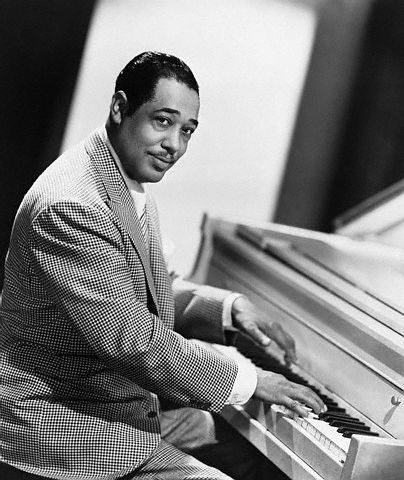
Jazz musicians continue this week as I listened to music by some famous jazz pianists Duke Ellington and Charles Mingus.


Duke Ellington was born in 1899 in Washington D.C. to a secure middle-class family. His family encouraged Ellington to develop and express his musical side and he started playing the piano at the age of 7. During high school he became engrossed in his musical studies. He received an award to attend music school, but he decided not to go and instead went to New York and began performing in nightclubs. He began performing professionally at the age of 17. He led a sextet that grew into a 10-piece ensemble. Ellington had a gift for enthusing his performers to perform their best and showcasing his soloists’ special talents. The solos of his trombonists and trumpeter influenced his “jungle style” in Ellington’s early works. As Ellington’s group grew in fame he had the best of the best in his band and they traveled all over the world. They toured Europe, Asia, South America, West Africa, Australia and North America. Over the years Ellington produced a wide variety of music that was simply amazing. He led the band up until shortly before his death. He was such a great band leader that he had a member in his band for 47 years. He is one of the great jazz musicians and band leaders of all time.

Charles Mingus was also a pianist, but was also a bassist. His musical taste was influenced by church music. He was trained in classical music and composition. His other great influence was listening to the greats of jazz. He toured with some of the greats in the jazz world. He settled in New York and played in some of the up and coming jazz bands and he developed into a great bandleader as well as a phenomenal pianist. He also founded the “Jazz Workshop” which was a group that let young musicians record and perform their music. Over the years Mingus composed over 300 scores and recorded over 100 albums. Mingus traveled extensively throughout Europe, Japan, South America, Canada, and the United States. He stopped touring 1977 when he was diagnosed with a rare nerve disease and was confined to a wheelchair for the final years of his life. He still composed music up until the end even though he couldn’t write or compose at a piano. His final works were sung into a recording device. When Mingus died he was mourned by many. His music is still listened and admired today.

This week I listened to Duke Ellington’s C Jam Blues and Take the “A” Train. In C Jam Blues I like the way the soloist all jive together and they fit together very well. It is great to hear good musicians jive together. In Take the “A” Train I love how well he plays. It sounds great and is nice to listen to when you are trying to relax. He is a great musician to listen him just soloing and it is also great to listen to his groups performing because of how he brings outs the best in all his soloists.

I also listened to some Mingus music to go along with this post. I listened to a solo done by Mingus. He has a good groove and sounds so cool. He also plays well in a big band setting. His playing is so cool, the things he can do just surprise me. It makes me wish I could play a bass at all and as well as Mingus. All of his music I listened to was phenomenal.


Duke Ellington and Charles Mingus are two greats in the jazz world. If you like jazz at all I would recommend listening to these two artists.

For more info please see:
http://www.biography.com/articles/Duke-Ellington-9286338
http://www.mingusmingusmingus.com/Mingus/index.html
Pictures from:
http://rhapsodyinbooks.files.wordpress.com/2009/02/duke_ellington_03.jpg
http://www.africanafrican.com/negroartist/JAZZ%20IMAGES3/slides/charles%20mingus.jpg

Friday, October 9, 2009

The Saxophonists- Ornette Coleman and John Coltrane

So, this week I am continuing with famous jazz musicians. This week’s musicians are saxophonists, Ornette Coleman and John Coltrane.


Ornette Coleman was born on March 9, 1930 in Forth Worth, Texas. He started playing alto and tenor sax as a teenager and had gigs “in dance bands and rhythm-and-blues groups.” His style was unorthodox and was rejected in Los Angeles. He kept working on his unorthodox sense of harmony while working as an elevator operator and playing on a plastic saxophone. In the late 1950s Coleman formed his own quartet so he could solo as he wished. After recording two albums he moved to New York where his radical style for improvisation was still not accepted. In the 1960s Colman taught himself to play violin and trumpet in unorthodox ways. By the 1970s he was performing erratically and preferred to spend his time composing music. He continued to play in many different groups in the coming years and traveled the world giving performances. In 2005 Coleman recorded a live performance in Italy of a song called Sound Grammar. It was said to reflect back on his music of the 1960s and he was “awarded the Pulitzer Prize for music in 2007.” Coleman influenced other saxophonists and other jazz soloists. His music still influences young musicians today.

John Coltrane was born on September 23, 1926 in Hamlet, North Carolina. His father played several instruments, so Coltrane learned to play the clarinet and E-flat horn. In high school his music interests changed and he learned to play the alto sax because of his change in music. He continued his music education in Philadelphia while he went to school and worked at a record company. He was called to service during World War II and served in Hawaii in the U.S. Navy Band. After the war he played tenor sax in a band. He played with different groups, but it wasn’t until he performed with Miles Davis in 1958 that his own musical awakening began. By 1960 he had formed his own quartet. It was with his group that his musical brilliance came out. He recorded many of his most famous songs during this period of time. John Coltrane died in 1967 after liver disease claimed his life, still years and years after his death his music still lives on in motion pictures and TV shows. His music is referenced in many film projects, such as Mr. Holland’s Opus. I still remember watched that movie in 9th grade Life and Careers class. Even though he died at the age of 41 his music lives on and on. Good musicians who have the talent to influence others decades after their death are the best of the best. John Coltrane is one of the best of the best. His music received many awards after his death, including Grammy Award for Best Jazz Soloist Performance for his album “Bye Bye Blackbird” and in 1997 was awarded the Lifetime Achievement Award.

I listened to some of Ornette Coleman’s music. It is interesting to say the least. His style is not something I would want to listen to all the time. It sounds like a bunch of annoying squawks and there is so much dissidence that I had to stop listening to it before I ripped my hair out. It sounds like a bunch of chaos as they all solo at the same time. I guess I just prefer musicians who play the correct chord changes and solo one at a time with a good groove going in the background.

I also listened to some of John Coltrane’s music. He is so much better after listening to Coleman. His music is more structured and actually has a melody instead of random notes and runs everywhere. I listened to one of his more famous pieces May Favorite Things. This song was used in the movie The Sound of Music. I like the jazzy feel of it while I follow the melody and words I learned from the movie. His music is nice to listen to. Plus saxophones are bomb. Yeah, I play the alto saxophone.

These two men changed the way jazz was played, listened to. In brief they helped to revolutionize jazz music.


For more info see:
http://www.biography.com/articles/Ornette-Coleman-9253139
http://www.johncoltrane.com/biography.html

Pictures from:
http://www.born-today.com/btpix/coltrane_john.jpg
http://home.att.net/~dawild/oc.gif

Friday, October 2, 2009

Jazz Trumpeters- Louis Armstrong and Miles Davis

The next few weeks I'm going jazz. This week is dedicated to two phenomenal trumpeters, Louis Armstrong and Miles Davis.


Miles Davis grew up in well to-do East St. Louis. He made a trip to New York saying he was attending Julliard Music School, but his real purpose was to hook up with other jazz musicians. Over the years he formed many different groups and help to revolutionize jazz. He was always trying something new and always had the best up-and-coming young artists. He went through his own trial and tribulations of drug abuse and other things. He was always up to trying something new and formed the first professional nonet, a group of nine musicians. He did not discriminate when choosing musicians for his group, as long as they could play well that was all that mattered. He had a skill for meshing many different styled musicians and making it work. His solos are not fast licks in the upper octaves, but rather lower notes at a slower pace and with the spacing of his solos. Also, many members of his bands went off to form their own groups. One blogger comments that very “few trumpet players could match the quality of his tone and no one has changed jazz as many times or spawned as many jazz leaders as Miles Davis.” I agree wholeheartedly with that statement.

The next trumpeter is Louis Armstrong. He grew up poor in New Orleans. He first learned to play the cornet while in reform school after shooting a gun in the air on New Year’s Eve at the age of 12. After he was done with that he was back to selling stuff and working to survive. It wasn’t until he met Joe “King” Oliver, who acted as his mentor and taught his how to play the cornet better. Over the years he played in numerous groups, went through numerous wives and traveled the world. When he went to Chicago as a young man early in his career his New Orleans style of playing was all the rage and other bands from New Orleans traveled to Chicago to bask in the craze. Louis Armstrong was known as “America's Ambassador” since he traveled across the country and the world wowing audiences with his band. Because of his great influence of the jazz work ever since 1974 high school jazz bands throughout the country have been honoring their most outstanding jazz students with the Armstrong Jazz Award. Every year, at my high school and many others, at the final band concert of the year the Armstrong Jazz Award is given to a senior who has displayed their love of jazz music and their skill at playing. Louis Armstrong lives on with this award and through his music.
I listened to both of these artists this week. Davis likes to have silence when he solos instead of playing as many notes as he can as fast as he can and as high as he can. Just listening to some on his pieces I am awed at his skill and love of the music. I love to listen to jazz music, but failed at the playing part and was terrified of soloing.

Louis Armstrong’s music also is quite phenomenal. One of his most famous songs is What a Wonderful World. I had heard this song many times, but had no idea that the great Louis Armstrong was its creator.


For more information:

http://www.redhotjazz.com/louie.html

http://www.miles-davis.com/timeline

http://airjudden.tripod.com/jazz/milesdavis.html

Pictures from:

http://eleetmusic.com/wp-content/uploads/2009/05/miles_davis1.jpg

http://alexpantarei.files.wordpress.com/2009/01/louisarmstrong.jpg

Friday, September 25, 2009

SOUSA: THE MARCH KING!!!!!!!!!!!!!!!!!!


Anyone who has knows anything about marches knows who the March King is, John Philip Sousa. Sousa was born on November 6, 1854 in Washington D.C. His father was a trombonist with the United States Marine Band. His music talent was nurtured when it became apparent at a young age that he was gifted. He organized and led his own ‘quadrille orchestra’ at the age of 11. He was active in all sorts of music groups and was tutored by many as he grew and his musical abilities grew. He directed theater orchestras and became determined to compose orchestra music for the theater. Since he worked as a director he became adept at changing and tweaking music to fit the band and performance venue and it was then his composing career began.

At the age of 25 he accepted the position as Director of the United States Marine Band. It was during his legendary 52 year career as director that he became famous. He wrote well over 100 marches during him years. His musical El Capitan “is believed to have been the first musical by an American composer to enjoy a successful run on Broadway.” His musical genius for composing military marches in legendary. Who know what he would have created if did not accept the position as Director of the United States Marine Band and stayed in the theater world. One of his major music influences was Mozart, another famous child prodigy and composer.


This week I did not listen to as much of Sousa’s music because I have played some of them in band class. I love Sousa’s piece The Stars and Stripes Forever. I like the face paced beginning and the loud and soft changes and how it is so energetic and yet difficult to play at points. I also like how the listener feels like the music is speeding up, even though it really is not. Who doesn’t love a good loud ending with a lot of crashes and booms? The piccolo solo is so amazing to listen to and surprising that anyone could play it. I had the pleasure of listening to the President’s Own Band and they had at least 6 piccolos playing in unison the tricky licks and it was just phenomenal to listen to.

Another of my favorite Sousa pieces that I also am playing is Presidential Polonaise. It is less march like than many of Sousa works, but you hear the classic Sousa touches of fast paced music with a lot of dynamic contrast. It is in the classic march style with the loud faster beginning and then the quieter trio and then it becomes louder and returns to the main melody line. This song is more or a dance, but it sounds so cool. It still surprises me that with the tricky licks Sousa writes that we can still play them separated and cleanly articulated.

If you like Sousa more famous pieces try looking for some of his less know pieces and experience the brilliance of Sousa.

For more info on his history check out:

http://www.8notes.com/biographies/sousa.asp

http://www.naxos.com/composerinfo/John_Philip_Sousa_24864/24864.htm

Pictures from:
http://www.marineband.usmc.mil/imgs/sub/library_archives/1892palacehotel.jpg
http://upload.wikimedia.org/wikipedia/commons/3/34/JohnPhilipSousa-Chickering.LOC.jpg

Saturday, September 19, 2009

The Classics: Take 2

So continuing with some of the classic artists, this post will be about two child prodigies, Wolfgang Amadeus Mozart and Ludwig van Beethoven.


Mozart was born in 1756 in Austria. He grew up in a very musically inclined family and composed his first song at age 5. By age 6 he and his elder sister were traveling Europe and performing. At age 9 his first song was published, over the following years he traveled Europe performing and wrote countless songs. He died in 1791 at the age of 35. In his short lifetime he produced over “20 operas, about 14-15 masses, 30-40 concerts (piano and violin), 50-60 symphonies, and 20 sonatas.” His music is still performed and listened to today.

Beethoven was born in 1770. He too was exposed to music at an early age and performed publicly by the age of 7 and half. His father said he was 6 at the time so Beethoven always thought he was younger than he really was. Before the age of 12 he had published his first work. His father was an alcoholic and Beethoven slowly replaced his father as the bread winner of the family. He traveled to Vienna to further his musical education and wrote many pieces over the years. He died in 1827 at the age of 55 after getting a cold. His funeral was attended by “between 10,000 and 30,000 people.” He was a great musician and his music also is still known today.

I listened to music by each composer to get a feel of their work. A favorite of mine by Beethoven is Ode to Joy. I learned to play it as a child when I studied piano briefly and it will always be a favorite of mine. I love the rise and fall of the melody and how the same lilting phrase is repeated a couple times, then changes and becomes more. Here is a humorous rendition of the song by the Muppets Meep Meep.
http://www.youtube.com/watch?v=xpcUxwpOQ_A&NR=1

I listened to Mozart’s Piano Concerto No. 21. I liked the beginning of it because it reminded me of music out of Pride and Prejudice. Overall it was a nice piece, but after so long I get bored of music with no words unless I’m the one playing it. It was a beautiful piece that would really cool if I could play it myself.

From last week’s composers I listened to the Prelude of Bach’s Cello Suite No. 1. It also reminds me of Pride and Prejudice. It’s a great piece to listen too. I like just listening to the prelude because it was short enough that I didn’t lose interest. It is another great piece of music.

The final song is listened to was the Overture from Handel’s Messiah. It was quiet and slower at the beginning, but then it picked up and was nice to listen too. The soft and loud points of the recording were great and make me wish I did half of what they did when I perform music. It was another great piece, one that is still being performed today and will forever be performed.

I only listened to one song and a few renditions of that song by these four composers. They all have countless songs out there and countless renditions so if you like one on the composers check out his other music for more you may like.


More info at:

http://www.buzzle.com/editorials/1-29-2005-64987.asp

http://www.lvbeethoven.com/Bio/BiographyLudwig.html

Pictures from:


http://www.1902encyclopedia.com/M/MOZ/mozart-01.jpg

http://robertarood.files.wordpress.com/2008/07/beethoven.jpg

Sunday, September 13, 2009

The Classics 1

Music has been around since the dawn of time and people who have influenced music are numerous. Some of the very first are from the baroque period of music and the 18th century. There were two great musicians from this time period. They were Johann Sebastian Bach and George Frideric Handel.


Bach was born in Germany in 1685. He came from a musically inclined family. He could sing very well, his father taught him to play the violin, and he learned to play the organ like his brother. When Bach’s parents died in quick succession he went to live with his brother. It was then he learned keyboard instruments form his brother who was an organist. At the age of 18 he was hired as an organist. When he was 20 he went to visit another church and hear its organist. He was so impressed he stayed 4 months and when he returned he began to write his own organ preludes. Bach moved from church to church until he obtained a job as court organist to Duke Wilhelm Ernst. After obtaining this job his output of music increased greatly. He became very popular with the royalty that he was offered another job with Prince Leopold. It was during this time of his life he created instrumental works and was in great demand. When he later moved again he created a lot of choral music.

Bach’s music did not directly influence his predecessors in music. By the 19th century his music was rediscovered and was found to be a great resource to train young musicians and became the core or classic music. His music is still studied today because of the harmonization Bach used. He understood in music in a way that no other musician ever did. He died at the age of 65. He was totally blind the last year of his life. His sons followed in his musical footsteps. Bach was married twice and fathered 20 children.

Handel was also born in Germany in 1685. Handel was a master of 18th century opera. He composed his first opera at the age of 19. He traveled to the center of German opera and from then went on a sojourn to Italy to further study his new obsession of opera. After Italy we went to England and continued to produce more operas and oratorios. He became “one of the most important practitioners of late Baroque opera seria.” His opera Messiah became well known and put him into the main stream. Every small town had a performance of his oratorios. Messiah “remains one of the most widely performed pieces in the entire classical repertoire.” Unfortunately, it does not lead performers to investigate Handel’s other works.

Both Handel and Bach influenced the flow of music during the 18th century. Even if their genius wasn’t properly appreciated until later years they still influence music today. Most beginning instrumental books have a selection or two by Bach and Handel. They are some of the greats of classical music. Their music has survived over 300 years and will continue to survive and inspire young composers as new music in created.


For further information and readings visit:

http://www.questia.com/PM.qst?a=o&d=102084300

http://www.8notes.com/school/history/Handel.asp

http://www.notablebiographies.com/Ba-Be/Bach-Johann-Sebastian.html

Pictures from:


http://www.justonic.com/images/bach.jpg

http://z.about.com/d/musiced/1/0/o/8/handel.jpg

Monday, August 31, 2009

Hi, my name is Erin and this blog was created for my English class. During this semester I will be posting about musicians and composers who changed and greatly influenced music and how their influence is still alive in today's music. The musicians/composers will be from all genres and types of music and all different times periods. There will be some classical composers from the 1500s and some more modern like Ray Charles and Lead Zeppelin. I will also include some jazz musicians such as Duke Ellington, Miles Davis, Charles Mingus and other greats such as them. There will also be a post on the March King, John Philip Sousa!!! That was my inner band geek coming out. I hope to cover a wide range of musical legends on this blog. Hope you enjoy reading what I write about some of the world's greatest and most influential musicians!!!